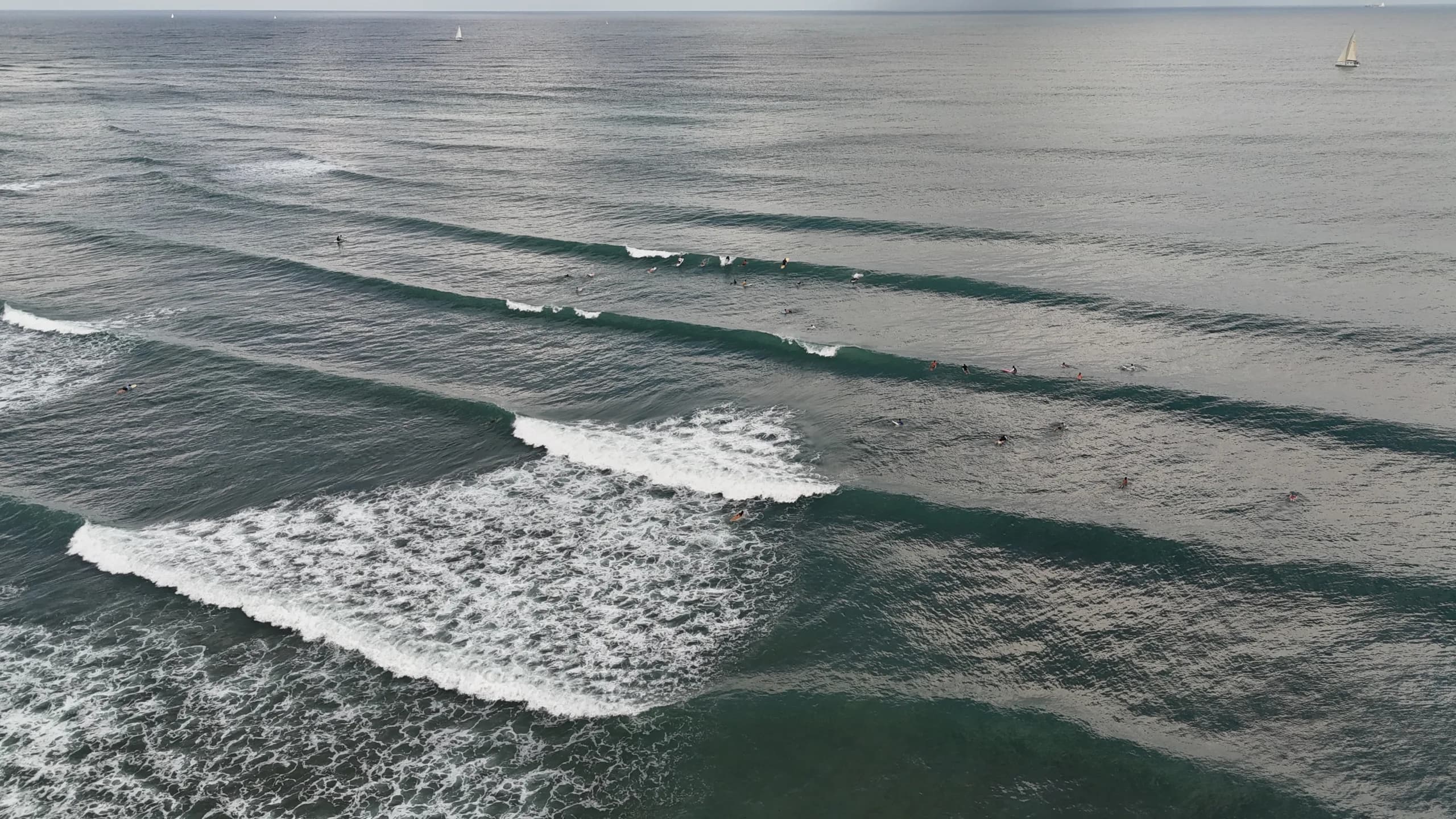
Live
Casino Beach Surf Cam
A live feed from the surf cam at Casino Beach, Bat Galim — a look at the sea before you head out.
Where should I surf?
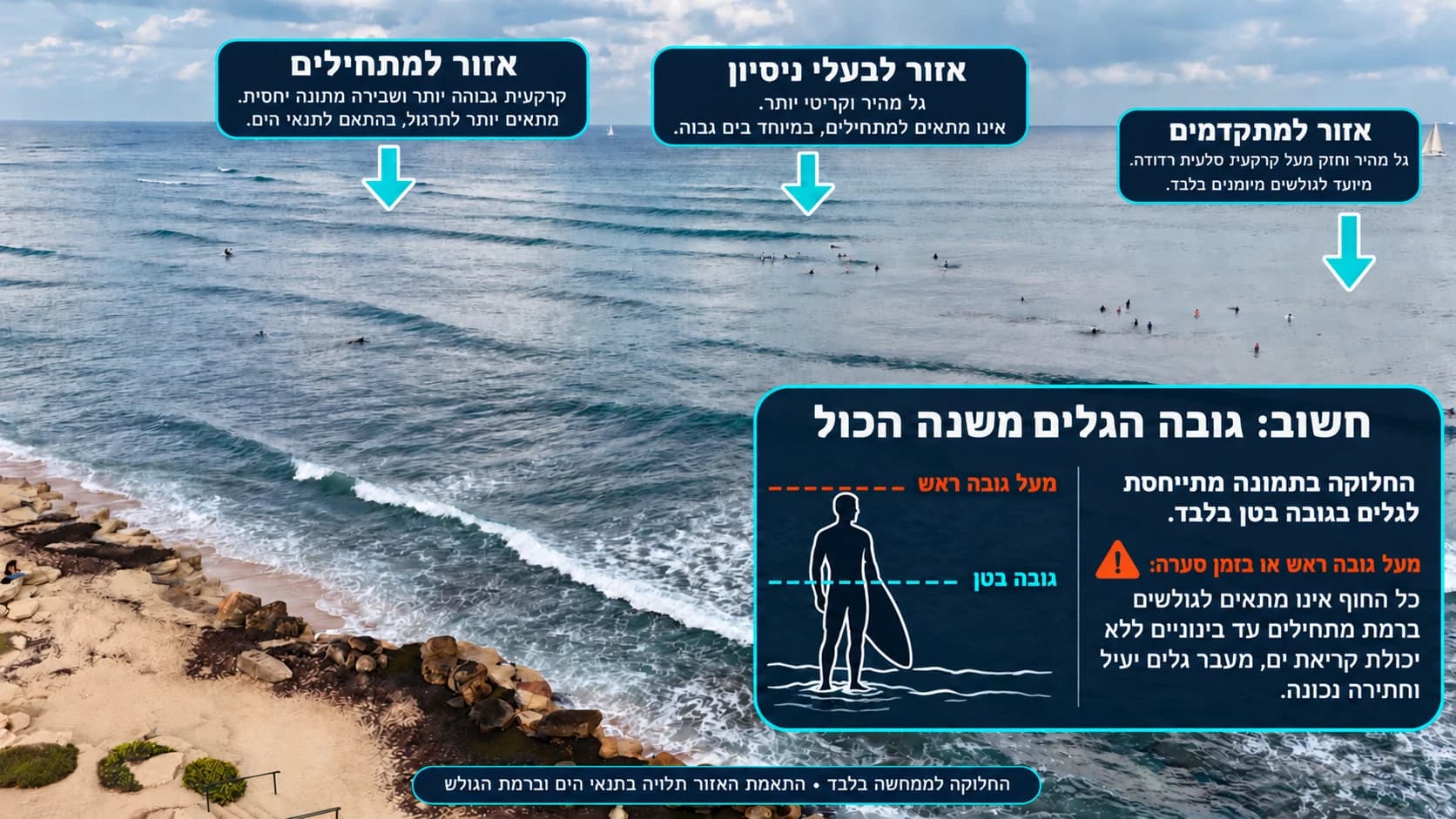
Plenty of new surfers — and people who've just moved to the neighborhood — get in the water without knowing the spot or where to position themselves. Sitting in a spot that doesn't match your surfing level makes progress harder and can endanger you and the surfers around you.
So I've put together a map of the recommended surf zones by level. When you position yourself correctly, you can catch more waves that suit your ability, practice and improve.
Complete beginner who's just rented a board? Don't go in the water without an instructor. Together with them, pick a zone suited to beginners and to the sea conditions, at a distance from the other surfers.
The zones in the image refer to belly-high waves only. The right zone depends on the sea conditions and the surfer's level.
Where do you get in?
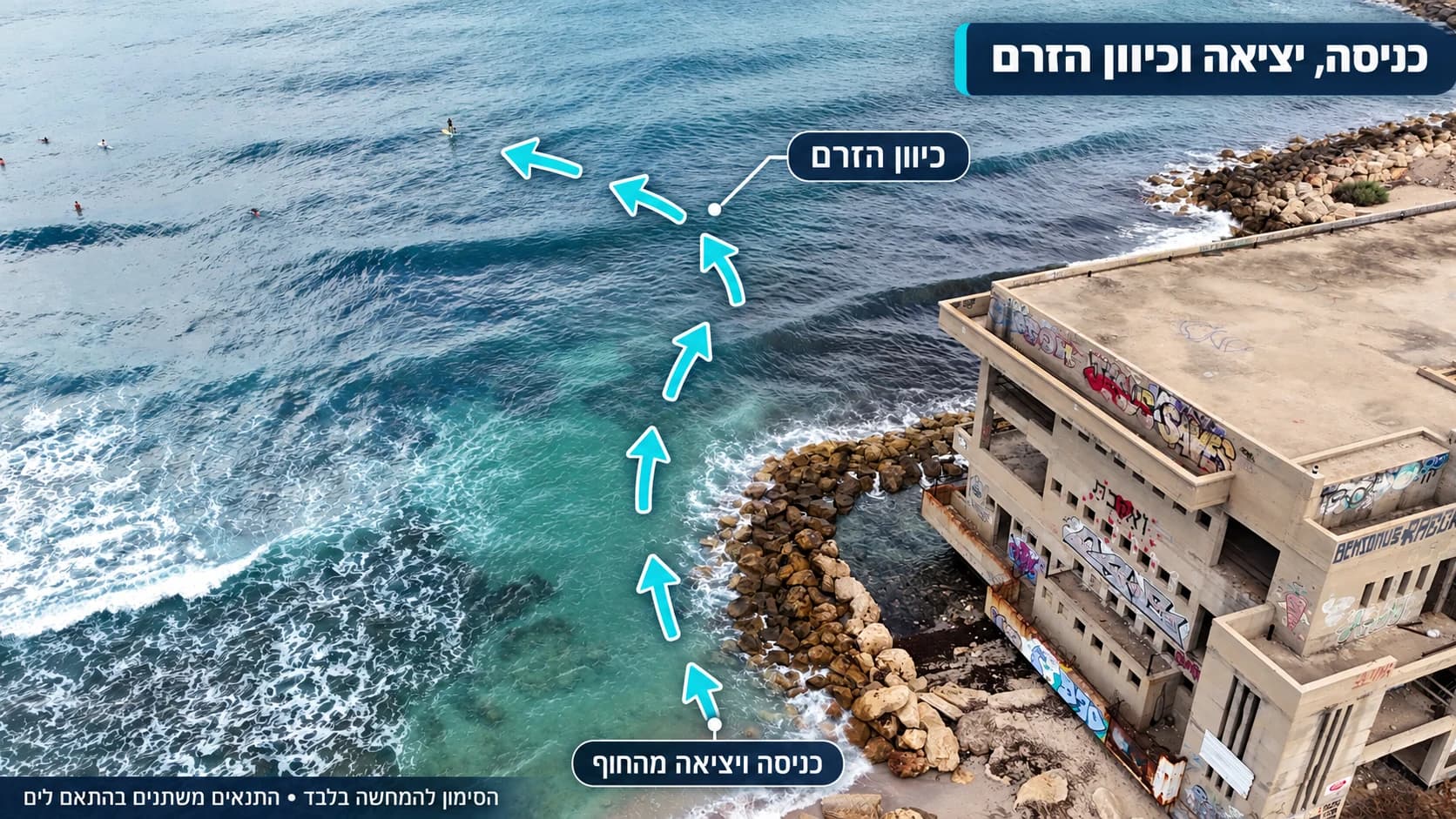
Casino Beach has two entry points and three exits. Get to know the points marked on the maps before you get in the water, and plan in advance how you'll get back to shore.
The main entry — right by the building
The current in this area, whose direction is marked on the map, can help experienced surfers reach the lineup without getting in other surfers' way. Its direction and strength change with the conditions.
Strong waves break by the building over a shallow rocky bottom. If you don't have an efficient paddle and a solid ability to get past waves, don't use this entry — whether you're on a soft-top or a hard board.
The second entry — to the beginners' area
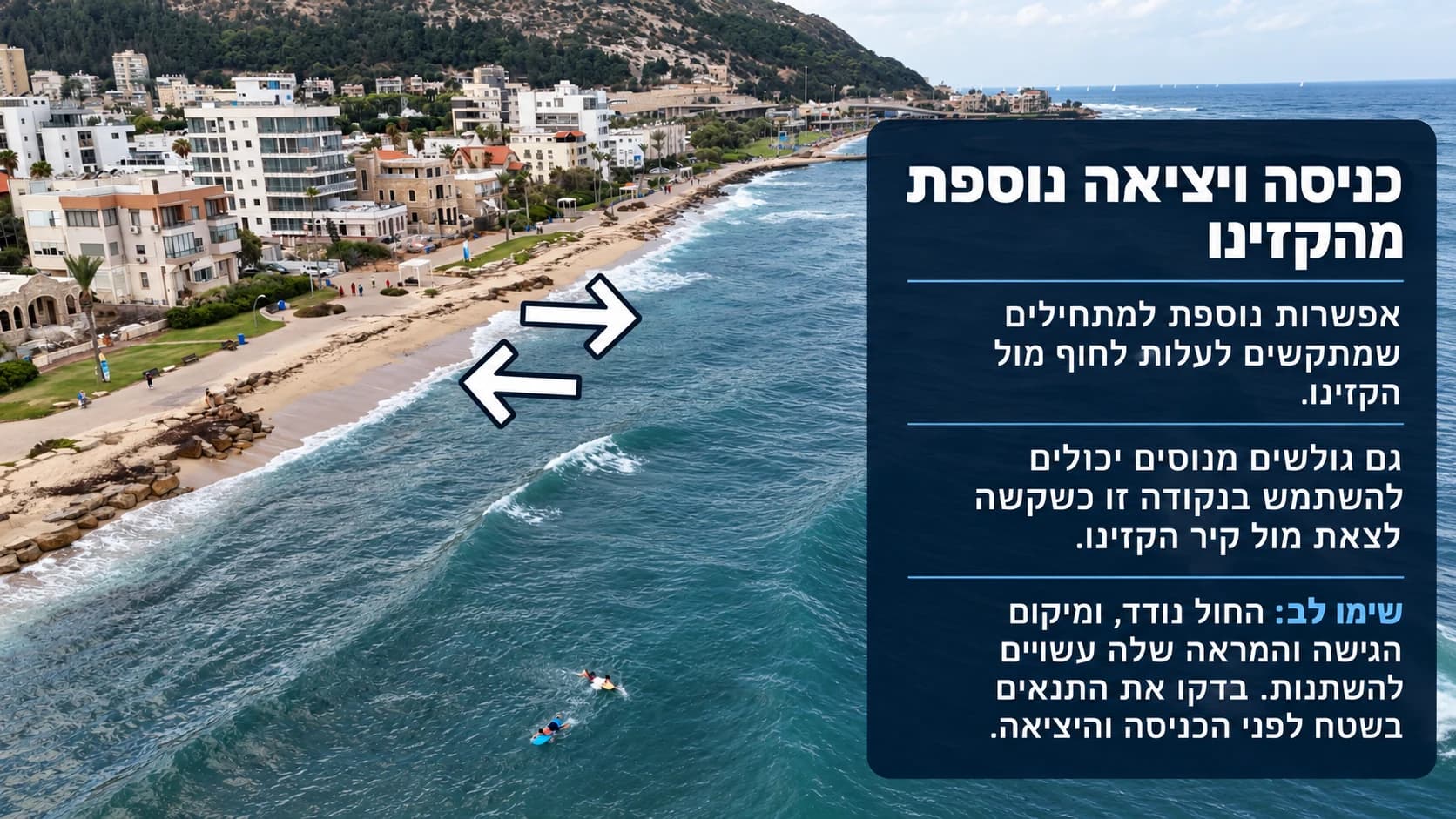
The second entry is better suited for reaching the beginners' area in small waves, when conditions allow. It can also be used as an exit. Complete beginners need an instructor's supervision.
Know the way out, too
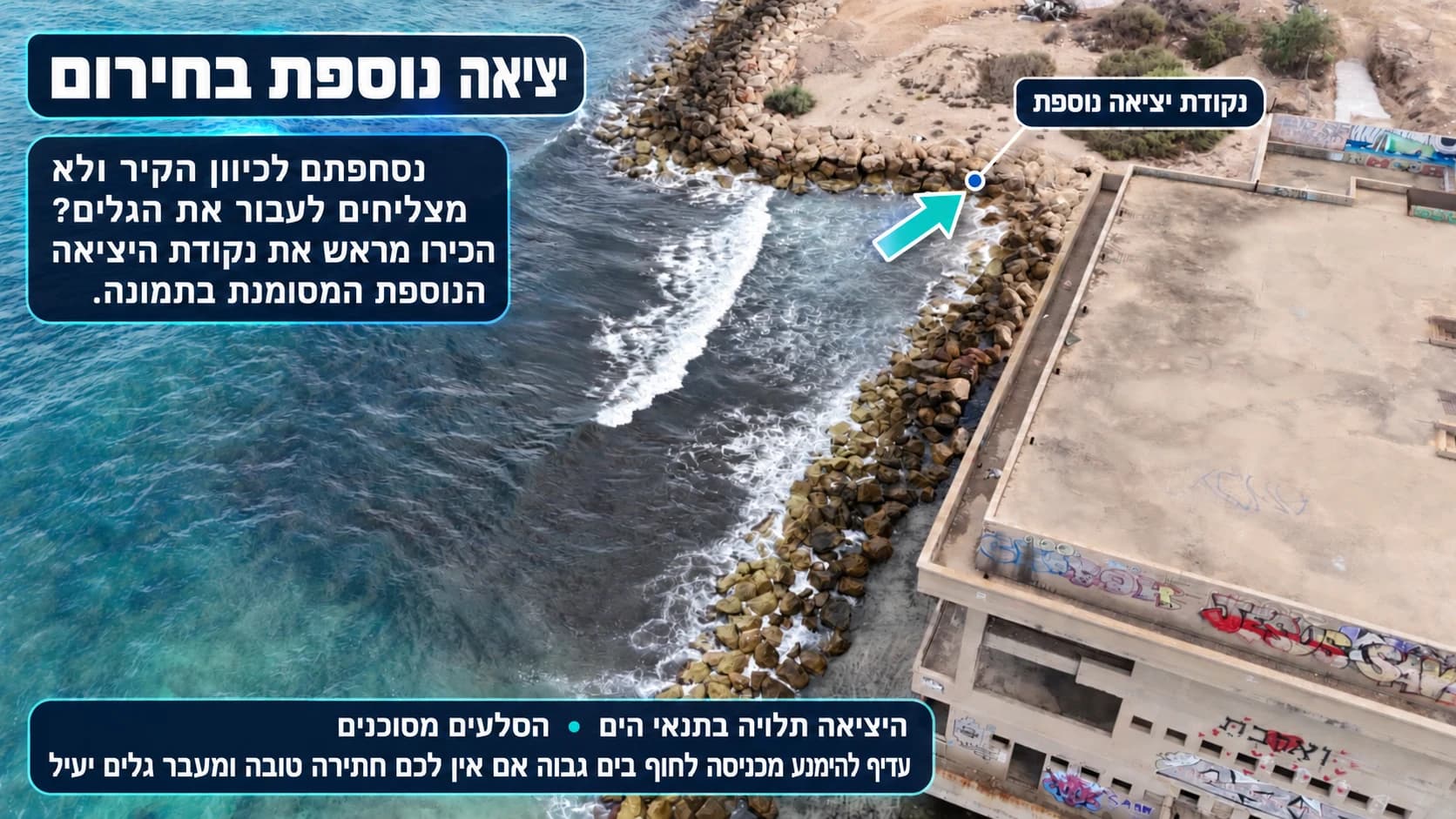
If you've drifted toward the wall and can't get past the waves, it's important to know in advance the small sandy passage marked in the image as an additional exit point.
Using the passage depends on the sea conditions, the waves and the drift at that moment. Don't assume you can stand by the rocks: the depth changes, and waves can knock you down even in shallow water.
Don't insist on paddling against a strong current to get back to the entry point, or on heading further out when you're getting tired and losing control. If you can't get out, use the emergency exit.
The markings are for illustration and don't guarantee a safe passage. Check the conditions on-site before getting in.
Rules of conduct in the water
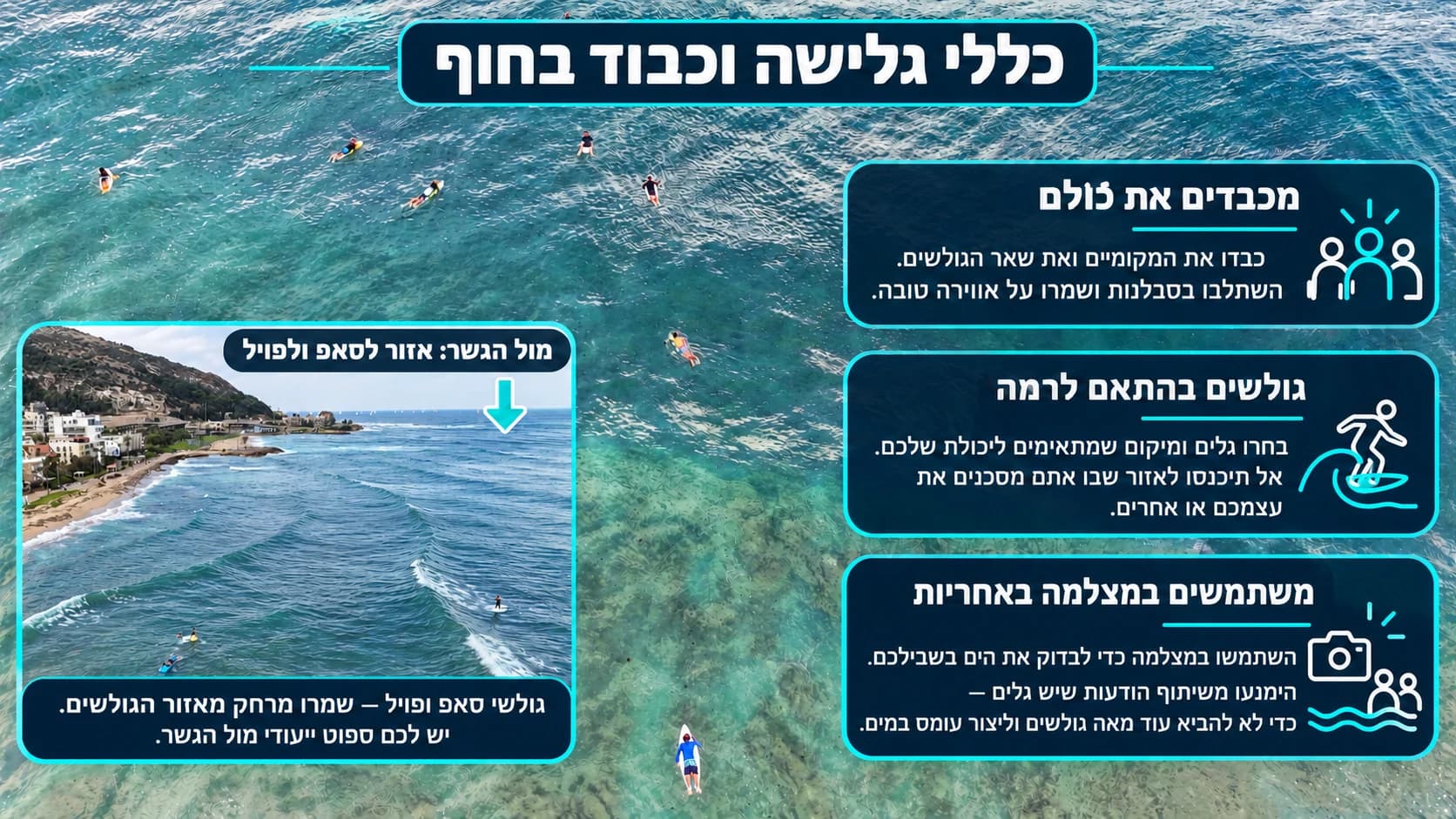
Coming from another beach, or new to the neighborhood? Take the time to get to know the spot and how things work here before getting in the water.
Surf according to your level
Don't position yourself in a spot that doesn't match your ability. You could endanger yourself and the other surfers.
Wait your turn and respect everyone
Don't paddle for every wave that comes. Wait patiently, don't cut in, and don't drop in on a wave where another surfer has right of way.
There are locals here who were born and raised on this beach and know it well. Fit in respectfully, listen, and keep the vibe good. The safety rules and right of way apply to everyone.
A lack of consideration can lead to collisions and injuries. If a dispute arises, don't escalate it — no wave is worth a confrontation or an injury.
SUP and foil riders
Keep your distance from the wave-surfers' area. Your spot is marked opposite the bridge. Check that it suits the conditions and your ability, and avoid crossing others' riding lines.
Use the camera responsibly
Check the sea for yourself, and avoid sending out mass messages when there are waves, to reduce crowding in the water.